Schedule Inspection
Use the calendar below to select a date & time convenient for you.
APPOINTMENT WINDOW: tech arrival time may vary by +/- 15 minutes (if your appointment is 9:00am, arrival window would be 8:45-9:15am)
The May 8 hailstorm in Tulsa caused widespread damage to commercial roofs, and taking quick action is key to avoiding costly repairs.
Here’s what you need to know:
Next steps? Inspect for interior damage, document everything, and schedule a professional roof inspection ASAP. Time is of the essence – insurance claims often have strict deadlines.

When hail strikes a residential roof, the damage is often easy to notice – missing shingles, granule buildup in gutters, or dents on metal flashing. A quick glance from the driveway might reveal the problem. But with commercial roofs, the situation is far more complex.
Commercial roofs are not only much larger – often exceeding 50,000 square feet in places like Tulsa – but they also come with challenges that make damage harder to detect. These roofs often have vast, flat surfaces with limited visibility from the ground. Add to that thousands of linear feet of seams, rooftop units, penetrations, and intricate drainage systems, and you’ve got a setup where damage can hide in plain sight. After a significant storm, such as the one on May 8, each of these elements becomes a potential weak spot.

Hail damage on residential shingle roofs leaves visible marks, but commercial roofing materials tell a quieter story. For example, TPO and PVC membranes might appear undamaged after hail impacts because they can flex and rebound. However, beneath the surface, the insulation board may be compressed or fractured – issues that require close inspection to uncover.
Single-ply membranes can suffer micro-fractures invisible to the naked eye. Modified bitumen roofs might develop hidden "bruising" in the asphalt layers or lose granules, exposing the material to UV damage over time.
"One of the most common misconceptions in commercial roofing is that storm damage always creates an immediate leak." – All Seasons Roofing
This hidden nature of damage means problems often remain unnoticed for weeks or even months. By the time water starts seeping through – whether it’s a ceiling in a Broken Arrow retail store or a Jenks church – moisture may have already spread through the insulation, causing further complications. Rooftop units, flashing, and drainage systems only add to the challenge of identifying and addressing hail damage.

HVAC systems, condenser coils, and ductwork on rooftops are often the first to show hail damage. Flattened condenser fins or broken fan blades might reduce airflow and increase energy bills, but they can also puncture the roof membrane. A building manager in Owasso or Sand Springs might notice these energy inefficiencies long before realizing there’s a roofing issue.
Flashing and seams are also vulnerable. Hail impacts combined with sudden temperature changes can weaken heat-welded seams or loosen flashing around walls, curbs, and penetrations.
"A small puncture, displaced flashing, clogged drain, or compromised seal may not result in an active issue during the storm, but it may become a future water entry point during subsequent rain events." – Jerry Griswell, Senior Project Manager, Intertek
Drainage problems often exacerbate the situation. Storm debris – such as broken equipment, displaced gravel, or shattered insulation – can clog drains and scuppers, leading to ponding water. On a flat roof in Claremore or Bixby, even a few inches of standing water after a storm can signal serious trouble. This extra weight stresses the structure and accelerates wear, making timely inspections critical.

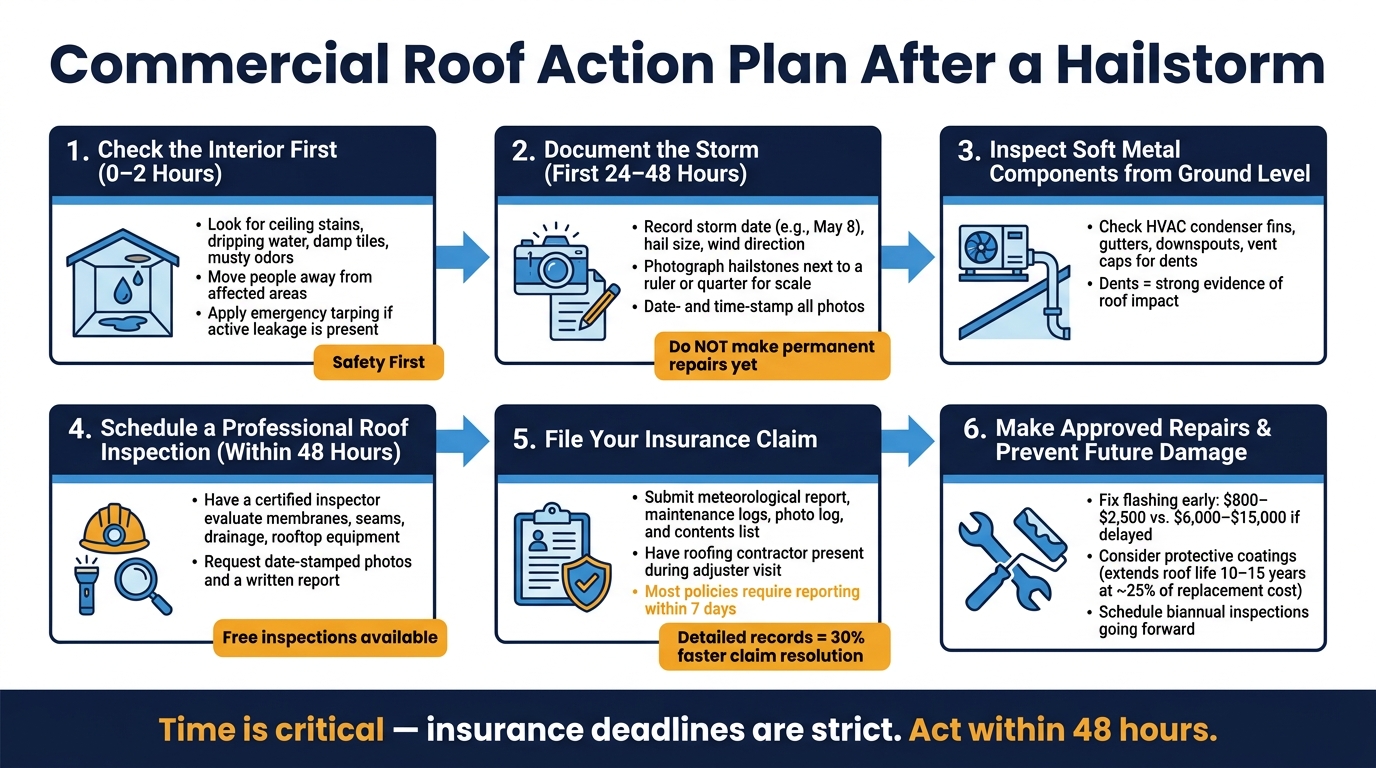
What to Do After a Hailstorm: Commercial Roof Action Plan
Taking the right steps immediately after a hailstorm can greatly influence how quickly and affordably you can restore your property. For building owners and property managers in Tulsa, Broken Arrow, Owasso, and nearby areas, quick and careful action is key to minimizing repair costs and avoiding prolonged disruptions.
Start by inspecting the interior of your building before heading to the roof. Look for signs like ceiling stains, dripping water, damp ceiling tiles, wet insulation, or musty odors. Be sure to document the specific areas where you notice damage. If you find water intrusion, move people out of those spaces and keep them from re-entering until a professional has assessed the situation. Sending maintenance staff to the roof immediately after a storm is risky – wet surfaces can be slippery, and the roof deck may have structural issues. If there’s active water leakage, emergency tarping can help minimize further damage until a professional inspection can be arranged. Once you’ve ensured interior safety, document all visible storm-related damage thoroughly.

After checking the interior, focus on documenting the storm’s impact. The first 24 to 48 hours are crucial for gathering evidence to support an insurance claim. Record the storm’s date (e.g., May 8), estimate the size of the hailstones, and note the wind direction. If hailstones are still visible on the ground, photograph them next to a ruler or a familiar object like a quarter to clearly show their size.
From a ground-level perspective, check for damage to softer metal components like HVAC condenser fins, downspouts, or window trim. Dents or bends in these areas may indicate that the roof was also hit. Make sure your photos are date- and time-stamped and organize them by roof section. Avoid making any permanent repairs until your insurance adjuster has inspected the property.

Even if there are no obvious leaks, it’s important to arrange a professional roof inspection. Experts caution that storm damage doesn’t always show up immediately. Issues like micro-fractures in membranes, compressed insulation, and stressed seams can take weeks to become noticeable but may lead to significant water damage later.
Arrowhead Roofing, a trusted name in the Tulsa area since 1987, provides free inspections for commercial properties. During an inspection, a skilled professional will evaluate membranes, seams, drainage systems, rooftop equipment, and penetrations. They’ll document their findings with date-stamped photos and a detailed report. Having your roofing contractor present during the insurance adjuster’s visit can also be helpful – they can point out less obvious hail damage and discuss potential code-required upgrades. To schedule an inspection, call Arrowhead Roofing at (918) 743-9257 or visit their website at arrowheadroofing.com. Acting quickly to get a professional evaluation can prevent further damage and help keep your operations running smoothly.
 Types of Hail Damage by Commercial Roof System
When it comes to hailstorms, the type of roof system plays a big role in how damage manifests. Each commercial roof system reacts differently to hail impacts, as seen on May 8 across the Tulsa metro area. From Jenks to Claremore, roofs faced unique challenges. Spotting damage early helps prevent leaks and strengthens your insurance documentation.
Flat and low-slope roofs, common in warehouses, retail spaces, and churches, often hide hail damage. The real issue might not be obvious punctures but compressed insulation boards. Hail can create soft spots in the insulation, weakening the roof’s membrane bond and increasing the risk of water pooling. Over time, this can lead to delamination.
"A commercial flat roof can sustain significant structural and membrane damage from a single hail or wind event and show almost no visible surface signs that would alarm an untrained observer." – Gold Key Roofing
After the May 8 storm, any flat roof with standing water 48 hours after rainfall should raise red flags. Ponding water not only adds weight but also speeds up membrane deterioration.

TPO is a popular roofing choice in Oklahoma, but as it ages, it becomes more brittle. Older TPO roofs are especially vulnerable to hail, which can cause semicircular cracks or micro-fractures. Newer TPO roofs might handle hail better, but even they require careful inspection after a storm.
The seams and flashing transitions in single-ply systems are particularly tricky. Heat-welded seams can start to separate subtly, and areas around penetrations – like HVAC units, pipes, and drains – are prone to damage from wind-driven hail. These are critical spots to check during post-storm inspections.
Hail dents on metal panels often appear dramatic but are typically cosmetic. However, the real concern lies in fasteners, seams, and coating layers. Hail vibrations can cause fasteners to loosen, a problem known as fastener back-out, which weakens the roof’s wind resistance and creates potential leak points.
For coated roofs, even tiny cracks in the coating can allow moisture to seep in. This moisture can remain hidden until temperature changes cause the cracks to expand into active leaks. Tools like infrared thermography are excellent for detecting this concealed moisture.
"Metal roofing panels may show dents that look dramatic but often represent cosmetic damage… The real risk is at fasteners, laps, and penetrations, where impacts can loosen connections or deform flashing details." – Ted Sellers, Owner, Sellers Roofing Company
Identifying these issues accurately is essential before documenting them for insurance claims. Up next, we’ll cover how to effectively document hail damage for both insurance and maintenance purposes.

After a hailstorm, having thorough and well-organized documentation can make all the difference when filing an insurance claim. For instance, after the May 8 storm, property owners in Tulsa, Broken Arrow, and Owasso who had detailed records found it much easier to navigate the claims process. The goal is simple: create a clear, timestamped record of your roof’s condition before and after the storm.
Start indoors. Take photos of new ceiling stains, wet tiles, or drips, and make notes about which room each issue is in. This helps create a connection between interior damage and external roof issues – something insurance adjusters can’t easily dismiss.
When you move to the roof, work systematically. Divide it into sections and label photos accordingly (e.g., "North field", "RTU-3 flashing"). Begin with wide shots to show context, then take close-ups to highlight specific damage. Make sure your camera or phone automatically stamps each image with the date and time.
Pay attention to soft metal components like HVAC fins, gutters, downspouts, and vent caps. Dents in these areas are strong evidence that the roof sustained significant impact. If these components show damage, it’s tough for an insurer to argue the roof wasn’t affected. You can also ask your roofing contractor to mark damaged areas with chalk before the adjuster arrives. This ensures even subtle damage, like bruising, gets noticed.
"A timely roof inspection helps separate recent storm-related damage from long-term wear, deferred maintenance, or conditions from previous weather events." – Jerry Griswell, Senior Project Manager, Intertek
Keep all receipts for emergency repairs, like tarping or drying equipment. Not only are these costs often reimbursable, but they also show you took immediate action to prevent further damage.
This combination of photos, notes, and receipts provides a solid foundation for your conversations with insurance adjusters and maintenance teams.

While photos document immediate damage, maintenance records tell the story of your roof’s condition over time. Past inspection reports and repair invoices are key to showing your roof was well-maintained before the storm. This can help counter an insurer’s attempt to classify damage as "pre-existing" or due to neglect.
"A carrier can deny a roof claim if it decides the damage came from wear, poor upkeep, or an unrepaired leak instead of a covered storm event. For commercial owners, proof drives the result." – Ted Sellers, Owner, Sellers Roofing Company
For commercial properties, No Dollar Limit (NDL) warranties often require annual or biennial inspections to remain valid. Missing even one inspection can void your warranty, leaving you unprotected when you need it most. To avoid this, keep a centralized digital file that includes inspection dates, inspector names, weather conditions, and photos. This not only safeguards your warranty but also strengthens your insurance claim.
| Documentation Type | What to Include | Why It Matters |
|---|---|---|
| Meteorological Report | Exact date, time, and hail size | Verifies the storm occurred during the policy period. |
| Maintenance Logs | Past repair invoices and inspection dates | Shows the damage is storm-related, not due to neglect or deferred maintenance. |
| Photo Log | Wide shots, close-ups, and interior stains | Provides clear evidence of damage to the roof system. |
| Contents List | Damaged inventory/equipment with values | Supports claims for property loss and business interruption. |
Lastly, don’t let a contractor permanently remove or replace your roof before the insurance adjuster inspects it. While emergency repairs are necessary, a full roof replacement beforehand can complicate or even jeopardize your claim.

Preventing leaks is a crucial step in avoiding costly interruptions to your operations. A leak in June, especially after a hailstorm, can quickly escalate into a tenant complaint, an insurance headache, and a logistical nightmare. The good news? Many of these leaks can be avoided with some proactive habits before the rain starts falling.
Set up a routine of biannual roof inspections – one in the spring to prepare for storm season and another in the fall before winter hits. For areas like Tulsa, Owasso, and Broken Arrow, this schedule aligns perfectly with Oklahoma’s most intense weather periods.
Keeping your drains clear is just as important. Clogged drainage systems are a leading cause of failure on roofs already weakened by hail. Efficient drainage ensures water moves off your roof quickly. Standing water that lingers for over 48 hours is a red flag and needs immediate attention. On flat or low-slope roofs, this pooling can put tremendous strain on membranes that may already be compromised by hail damage.
"A leak in June after a major hailstorm is a roof emergency, an insurance claim, and a tenant relations crisis. The difference is often what was – or wasn’t – caught during a routine inspection six months earlier." – RainTech Roofing
In addition to post-storm inspections, stick to this biannual schedule to catch potential issues early. Many insurance policies require timely reporting of damage, and having documentation from a HAAG-certified inspector can hold the same weight as the insurance company’s own assessment. If inspections reveal surface wear, it’s worth considering extra protective steps.

For roofs that are still structurally sound but showing signs of wear, applying a protective coating can be a smart, cost-effective solution. Silicone and elastomeric coatings create a durable, waterproof layer that seals vulnerable seams, which are often the first to fail under hail impact. These coatings are also designed to handle Oklahoma’s extreme temperature shifts, which can weaken roof membranes over time. A properly applied coating can extend the life of a commercial roof by 10 to 15 years and typically costs about 25% of the price of a full replacement.
If a coating isn’t enough, a system upgrade might be the better option. Arrowhead Roofing can assess whether switching to a stronger material, like 60 mil TPO instead of the standard 45 mil, or opting for a two-ply modified bitumen system, is the right move. These upgrades provide greater puncture resistance, which is especially valuable in high-hail areas like Tulsa and Claremore. Not only do these improvements extend the roof’s lifespan, but they also help protect your operations from future disruptions.

The May 8 hailstorm left its mark on your roof, and acting quickly can save you from escalating costs. For commercial property owners, church administrators, and facility managers in Tulsa, Broken Arrow, Owasso, Jenks, and nearby areas, time is of the essence. Most insurance policies require storm damage to be reported within 7 days, so don’t delay.
Building on earlier advice, prioritize these steps: check for interior damage, schedule a certified roof inspection, and organize all your documentation. Keep a dedicated roof file with date-stamped photos, inspection reports, and repair receipts. Why? Claims supported by detailed records are typically resolved 30% faster than those without.
"The roof is the largest, most expensive single element of nearly every commercial building you manage. It’s also the one most people ignore until water is on the floor." – RainTech Oklahoma
Addressing issues promptly not only protects your roof but also keeps repair and replacement costs in check. For example, fixing a flashing failure early might cost $800–$2,500. But if left unattended, the costs can skyrocket to $6,000–$15,000 once interior and equipment damage sets in.
Arrowhead Roofing has been a trusted partner for commercial property owners in Tulsa and Oklahoma since 1987. If your property was impacted by the May 8 hailstorm, schedule an inspection today by calling (918) 743-9257 or visiting arrowheadroofing.com. Don’t wait – take action now to safeguard your investment.
Hail damage on commercial roofs can be tricky to spot because much of it happens beneath the surface. Impacts from hail can crush or fracture the insulation boards under the membrane, weakening adhesive bonds and creating soft spots that might not show visible leaks right away. Issues like micro-fractures, seam separations, and displaced flashings can also develop. Over time, these problems often worsen due to thermal movement, eventually leading to leaks well after the storm has passed.
Before starting a claim, focus on safety and gathering detailed evidence. Document the storm’s date and time, and capture clear photos and videos of the damage. Use items like a coin or ruler to show scale. Don’t forget to check for damage at ground level, such as dented HVAC units or gutters. Cover exposed areas with tarps to prevent further harm, but hold off on any permanent repairs. Keep receipts for any emergency fixes, review your insurance policy carefully, and arrange for a professional roof inspection before the adjuster visits.
Ponding water becomes a serious issue if it lingers on your roof for more than 48 hours after rain. These standing puddles often point to drainage problems, which can accelerate damage to the roof membrane and increase the load on the structure. After a hailstorm, noticeable ponding might suggest new structural damage or clogged drainage systems. It’s essential to have a professional inspection in such cases to avoid leaks and potential interior damage.
