Schedule Inspection
Use the calendar below to select a date & time convenient for you.
APPOINTMENT WINDOW: tech arrival time may vary by +/- 15 minutes (if your appointment is 9:00am, arrival window would be 8:45-9:15am)
We plan your Tulsa hotel’s roof replacement one roof section at a time, starting where work affects the fewest occupied rooms.
Before crews start, we match your booking calendar to room blocks, noise windows, guest routes, and equipment service needs.
Our plan covers:

The goal: <u>keep room availability, guest notices, and roof work on the same schedule</u>.
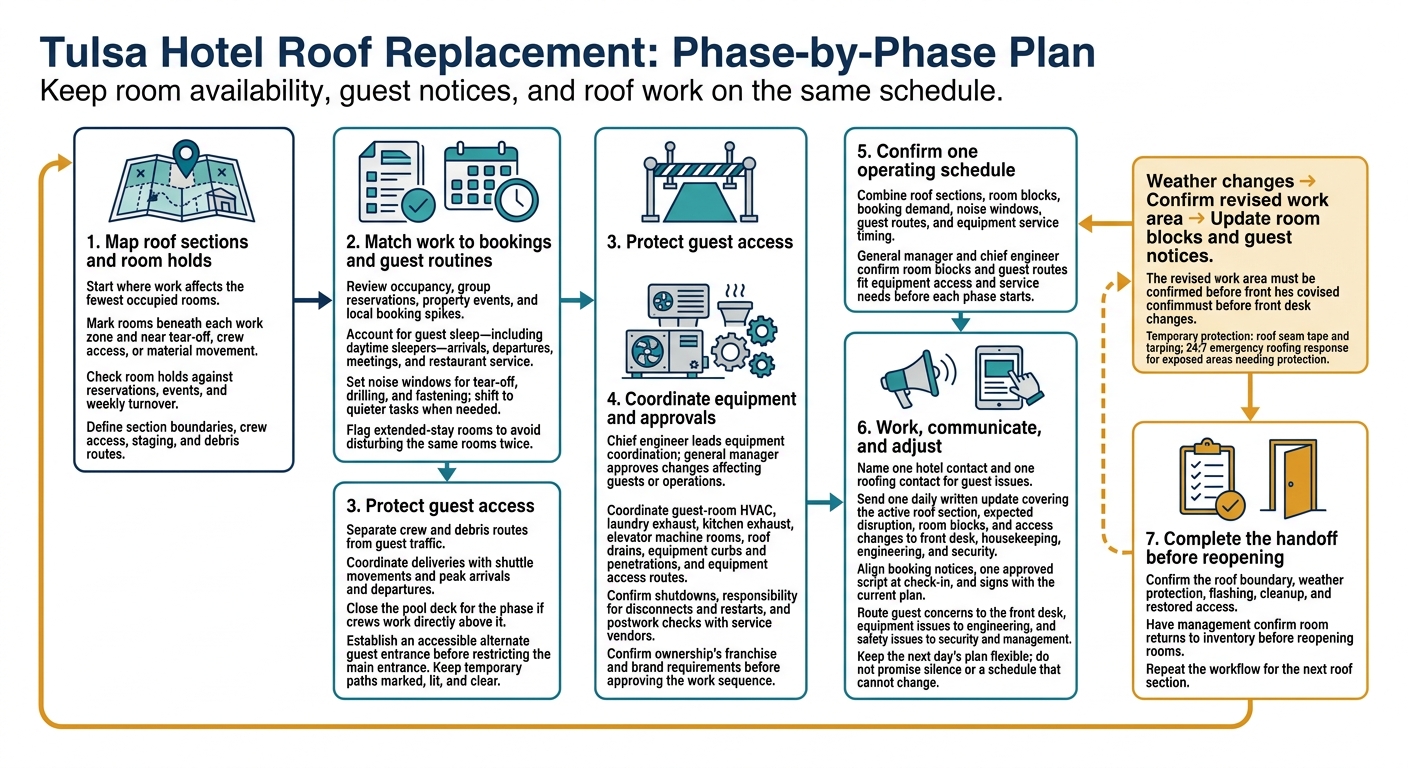
Tulsa Hotel Roof Replacement: Phase-by-Phase Plan
Use the room map to choose the roof section that takes the fewest rooms out of inventory – a guest-room wing isn’t always a usable roof section.
This ties each phase to actual room loss, rather than a rough wing-by-wing estimate.
Mark rooms beneath each work zone and near planned tear-off, crew access, or material movement.
Before changing inventory, check those room holds against reservations, the event schedule, and weekly turnover.
For each section, agree on the crew access point, material staging area, and debris route.
Keep these routes separate from guest traffic, and flag conflicts with breakfast service, pool access, and main entrances before work starts.
Before switching sections, set a handoff point that identifies the roof boundary, such as a firewall separation or expansion joint.
Include weather protection, flashing, cleanup, and restored access in that handoff, and have management confirm room returns to inventory before reopening rooms.

Once the roof section is set, we’ll plan work around guest traffic to protect room-nights, sleep, and arrivals.
Before we set work hours, tell us when guests sleep, arrive, and depart – including daytime sleepers – and share meeting times and restaurant service periods.
Set noise windows for tear-off, drilling, and fastening, with the loudest work scheduled for the least disruptive hours.
Then shift to quieter tasks, such as membrane welding, caulking, and flashing – but don’t promise silence.
Before each shift, confirm the day’s tasks and roof sections with us, then share the plan with the front desk and housekeeping.
Name one hotel contact and one roofing contact for guest issues, and direct guests to the front desk.
The front desk passes the location and issue to both contacts and updates staff when the schedule changes.
Weather can still change the next shift, so keep the following day flexible.

Once the roof zones are set, we’ll use bookings and weather to schedule work in each zone.
Share your occupancy calendar before we lock in the work sequence, including group reservations, property events, and local booking spikes.
Identify when rooms beneath active work can stay out of inventory, and schedule disruptive work during lower-demand periods.
Include pool and terrace operating schedules and flag extended-stay rooms so we don’t disturb the same rooms twice.
Agree on a weather-change process with your general manager and chief engineer.
If weather shifts the schedule, confirm the revised work area before the front desk changes room blocks or assigns arriving guests.
For exposed areas that need protection, we provide 24/7 emergency roofing response and temporary protection, including roof seam tape and tarping.
Update guest notices to reflect the revised plan, including changes to pool, terrace, or entrance access.

Once the roof phase is set, map the guest paths that must stay open.
Before work starts, walk each access point with your general manager and chief engineer, then share the route map with front-desk and security staff so room access stays predictable through each phase.
At the pool deck, plan how crews will contain debris and remove it without crossing guest seating areas or blocking pool access.
If crews are working directly above the deck, close it for that phase.
At the porte cochere, schedule deliveries and debris removal around shuttle movements and peak arrivals and departures.
Keep worker access separate from guest drop-off, luggage handling, and vehicle queues.
At the entrance, schedule deliveries and crane lifts outside breakfast and lobby peaks.
Set up an alternate guest entrance with an accessible route before restricting the main entrance.
Mark every turn before guests reach a barrier, and keep temporary paths lit and clear.

For each roof phase, put your chief engineer in charge of equipment coordination, including access and who handles restarts with service vendors.
Have your general manager approve any changes that affect guests or hotel operations.
| Equipment or area | Hotel staff lead | Service vendor or specialist | Record before the phase starts |
|---|---|---|---|
| Guest-room HVAC | Chief engineer | HVAC service contractor | Rooms served, unit access, and proposed shutdowns. |
| Laundry exhaust | Chief engineer and housekeeping lead | Laundry or dryer vent specialist | Laundry hours, vent locations, and service needs. |
| Kitchen exhaust | Chief engineer and kitchen manager | Kitchen exhaust service vendor | Meal-service hours, exhaust locations, and flashing details. |
| Elevator machine rooms | Chief engineer | Elevator service company | Access needs and work that could affect elevator service. |
| Roof drains | Maintenance staff | Our team | Drain locations, known drainage concerns, and debris-control needs. |
| Equipment curbs and penetrations | Chief engineer | Our team and the relevant equipment vendor | Equipment bases, penetrations, and who is responsible at each location. |
| Access routes | Chief engineer | Our team and service vendors | Routes needed to reach equipment during and after replacement. |
Before we release a roof phase, have the vendor confirm shutdowns, who handles disconnects and restarts, and postwork checks.
TPO is our default membrane and accounts for the large majority of our commercial work.
Keep the contacts and access map with maintenance staff, and use our commercial roof maintenance plans for regular follow-up.
With equipment access set, the front desk can keep guest routes clear.

Once the access map is set, share the plan with guests before they arrive.
At booking, use website notices and reservation confirmations to explain expected noise, access changes, amenity closures, and planned work hours – and note that the schedule may change.
At check-in, use one approved script that reflects the current work area, open access route, and amenity status.
Clear, consistent information helps guests avoid surprises that can lead to complaints and negative reviews, protecting their experience.
Post signs in common areas and at construction zones showing the closed area, open route, and current amenity status.
Have your designated hotel contact confirm the day’s work areas and effects on guests with us.
Then send one daily written update to the front desk, housekeeping, engineering, and security so staff messages match guest notices.
Direct guest concerns to the front desk first, equipment issues to engineering, and safety issues to security and management.
Let management approve room moves or other responses, and don’t promise silence or a schedule that won’t change.
If a brand or franchise sets rules for guest notices, confirm the wording with ownership before publishing.

Brand standards may cover roof appearance and the order of work, not just guest notices.
Ask ownership to confirm the requirements and clear up any questions before you approve the work sequence.
Share those requirements early so we can include them in the plan before work starts.

Once the phase map, access routes, and equipment plan are set, bring them together on one operating schedule.
Include roof sections and room blocks, and match each phase to booking demand, room availability, and the timing of disruptive work.
Before each phase starts, have your general manager and chief engineer confirm that room blocks and guest routes fit the equipment plan’s access needs and service timing.
This keeps room inventory aligned before crews begin work.
Send one daily written update to the front desk, housekeeping, and security with the active roof section, expected disruption, and access changes.
Make sure the update aligns room blocks with roof phases before staff give guests new instructions.
Your hotel can stay open during roof replacement, but we need to plan carefully to protect your reputation and your guests’ experience.
We’re a locally owned family business serving Tulsa since 1987.
Request a free inspection to start planning your project.
When bookings change, review which rooms you can afford to take out of inventory and how those closures fit the roof work.
Plan around roof sections, guest quiet hours, and weather to protect your guests’ experience and your reputation.
The information provided doesn’t explain how to confirm that rooms are ready to reopen.
Replacing your hotel roof while staying open takes careful planning to protect your reputation and your guests’ experience.
Request a free inspection to start planning your project.
