Schedule Inspection
Use the calendar below to select a date & time convenient for you.
APPOINTMENT WINDOW: tech arrival time may vary by +/- 15 minutes (if your appointment is 9:00am, arrival window would be 8:45-9:15am)
The May 8, 2026 hailstorm caused widespread roof damage across Owasso, Skiatook, Collinsville, and North Tulsa.
Here’s what you need to know:
Next Steps: Document damage with photos, and call a professional roofer for a detailed inspection. For immediate help, contact Arrowhead Roofing for a free evaluation at (918) 743-9257.

Before stepping outside to assess your property, take a moment to ensure it’s safe. It’s natural to want to check for damage right away, but heading out too soon after a storm – especially one as severe as the May 8 storm in the Tulsa metro – can be dangerous.
“Don’t panic, but also don’t be too quick to head outside either. The reason to wait a bit is that sometimes these supercell storms come in back to back, or they form in a way where there is a small break in the action that feels like it’s over but really isn’t.” – Robert Moore, Green Country Roofing
Check your local news or a reliable weather app to confirm that the storm has fully passed before going outside. Once it’s safe, start your inspection indoors. Use a flashlight to look for water stains or leaks in your attic, closets, or ceilings. If you notice active leaks, it’s a sign of possible roof damage, and you should contact a professional instead of attempting to inspect further on your own.

Avoid climbing onto the roof. Wet shingles are slippery, and hail damage – like fractured asphalt or loosened granules – can be tricky to identify without proper training. A ground-level inspection is safer and often sufficient for most homeowners. When you step outside, be alert for hazards like fallen branches, hanging debris, or anything that could still fall. Look for dented gutters or accessories, as these may indicate hail damage to the roof. Use binoculars to carefully examine the roofline without the need for a ladder.

Having the right tools can make your inspection safer and more effective. Here’s what to keep handy:
| Tool | Purpose |
|---|---|
| Binoculars | Identify shingle bruises or missing sections from the ground |
| Smartphone or camera | Take date-stamped photos and videos for insurance purposes |
| Flashlight | Spot water stains or leaks in dark areas like the attic or closets |
| Notepad or spreadsheet | Track observations and create a detailed inventory of damage |
When taking photos, ensure your device’s date and time stamp is turned on. This provides a clear record of when the damage occurred, which is essential for insurance claims. As Robert Moore from Green Country Roofing advises:
“Document absolutely everything that was damaged – take pictures, make a spreadsheet, or write it all down on a sheet of paper.”

Start your inspection from the ground level, focusing on your roof and nearby structures affected by the May 8 storm. You can uncover a lot of information without needing to climb up.
Take a close look at your gutters and downspouts. If you notice a gritty buildup of shingle granules, it’s a clear sign that hail has impacted your roof.
“If you find small stones or granules in your gutters, this is a good sign that your roof has suffered from hail trauma.” – Messick Roofing
Next, check soft metal components like roof vents and flashing for dents. Even small dings on gutters or vent caps indicate a strong hail impact.
“Dents in soft metal accessories like vent caps and gutters are a tell-tale sign that hail of significant size hit your home, even when the shingles themselves look untouched.” – Tier-One Roofing
Don’t forget to examine your siding and window frames. Cracks, chips, or dents in vinyl siding or punctured window screens often suggest that your roof endured similar force.
These observations provide a good starting point for assessing your roof’s condition from a distance.

Using binoculars, scan your roofline from your driveway or yard. Look for dark, circular spots where granules have been knocked away, exposing the darker asphalt underneath. Pay special attention to the ridge caps at the roof’s peak, as they take the brunt of hail impacts.
Also, watch for shingles that appear lifted, curled, or missing entirely. Inspect the flashing around chimneys and vents for bending or separation. If something looks unusual but isn’t clear from the ground, mark the area for a professional to inspect more closely.
Extend your inspection to other outdoor structures to get a full picture of storm damage.

Look beyond the roof to assess the storm’s effect on other parts of your property. For example:
| Outdoor Area | Key Observations |
|---|---|
| Gutters & downspouts | Dents in metal; granule buildup at the base |
| Roof vents & flashing | Dings, dents, or “splatter” marks on soft metal |
| Siding & window frames | Cracks, chips, or visible impact dents |
| AC condenser unit | Bent or crushed aluminum fins |
| Patio furniture & fencing | Fresh dents, cracked plastic, or stripped wood stain |
Make sure to document everything with date-stamped photos. This can be crucial if you need to file an insurance claim. In Oklahoma, most policies require hail damage claims to be submitted within 12 months of the storm date.
Once you’ve thoroughly documented the exterior, it’s time to turn your attention indoors for further inspection.

When assessing hail damage, the focus often shifts to roofing materials, where the harm can be subtle and easy to miss. Understanding these nuances is crucial for homeowners.
Hail damage on asphalt shingles doesn’t typically involve clean holes or missing pieces. Instead, it often results in bruising, where the asphalt mat beneath the granules gets fractured. These bruised spots may feel soft or spongy to the touch but are usually invisible to the naked eye.
“Hail does not always tear shingles off. Most of the time, it bruises them. The asphalt mat underneath the granules gets fractured.” – Tier-One Roofing
Another common issue is granule loss. Hail knocks these protective granules loose, leaving bald spots that expose the asphalt underneath. While this may not cause immediate leaks, the exposed asphalt becomes vulnerable to UV rays, which can make shingles brittle over time and shorten the roof’s lifespan. In cases of high-velocity hail, radial cracks may form, further reducing the roof’s ability to shed water effectively.
| Damage Type | What It Looks Like | Effect on Your Roof |
|---|---|---|
| Bruising | Dark, circular soft spots on shingles | Fractures the internal mat; leads to leaks over time |
| Granule Loss | Bald patches; granules in gutters | Increases UV exposure; accelerates aging |
| Cracking | Radial or spiderweb-like fractures | Weakens water-shedding ability |
These damage patterns underscore why a simple visual inspection often isn’t enough to identify the full extent of the problem.

Different roofing materials react uniquely to hail. For example, homes in areas like Owasso, Collinsville, or Skiatook with metal roofs often show visible dents on panels and accessories, making the damage easier to spot. Tile or slate roofs, on the other hand, can develop cracks or chips that are harder to detect from ground level. Flat roofing systems, such as TPO or PVC, are also vulnerable. Hail can puncture the membrane, and if standing water collects in these areas, the damage can escalate quickly.
A basic ground-level inspection may offer some clues, but much of the damage remains hidden without a closer, hands-on evaluation. Many homeowners fail to realize this critical step.
“Many roofs that ‘look fine’ from the driveway still sustain hidden functional damage that only becomes apparent under close inspection.” – Oklahoma Roofing Authority
From the driveway, you can only see the most accessible slopes of your roof. Areas like back slopes, upper ridges, and spots behind dormers are completely out of sight. Even on visible slopes, bruising and mat fractures can only be detected by touch. A professional inspection involves physically pressing on suspected areas to feel for soft spots that might not be visible.

“Granule loss alone isn’t always claim-worthy – but when it exposes the mat or weakens water shedding, it becomes functional damage.” – Oklahoma Roofing Authority
This distinction between cosmetic and functional damage is critical, especially for insurance claims. Comparing DIY roof inspections vs. professional services shows why scheduling a professional inspection is essential, particularly before the 12-month filing deadline passes.
Sometimes, the first clues of roof damage show up inside your home before you notice anything outside. After the May 8 hailstorm, taking a closer look indoors can help you catch problems early. Acting quickly can also strengthen your case if you need to file an insurance claim.
Start by walking through each room and carefully inspecting your ceilings and walls. Look for brown rings, spotty stains, or bubbling paint on ceilings. On walls, check near windows and door frames for soft spots or peeling paint. Pay extra attention to areas around chimneys, roof valleys, skylights, and exterior walls – these are common spots where water can sneak in.
A musty smell in upper rooms or closets is another red flag. Often, this odor shows up before you see visible mold.
“By the time you see a brown ceiling stain, you’re usually dealing with insulation, drywall, and possibly mold.” – Jason Birk, Owner, Courtesy Care Restoration, Inc.
One thing to note: water doesn’t always drip straight down. It can travel along rafters or pipes before it shows up on your ceiling. So, a stain might not be directly below the roof damage.
Once you’ve checked the main living areas, extend your inspection to less obvious spaces like the attic and garage.

The attic is one of the best places to spot early signs of roof damage, and it’s safer than climbing onto the roof. During daylight, look for beams of light shining through the roof boards. Use a flashlight to check the rafters and decking for damp spots, water stains, or matted insulation.
“The attic tells the truth, so bring a flashlight.” – Jason Birk, Owner, Courtesy Care Restoration, Inc.
The garage is another easy place to check. Since garage ceilings and walls are often unfinished, water stains and discoloration are easier to spot. Focus on the ceiling near the roofline or above the garage door for any signs of moisture.
| Interior Area | What to Look For | Urgency |
|---|---|---|
| Attic | Damp insulation, daylight through boards, water stains on rafters | High |
| Ceilings | Brown rings, bubbling paint, active drips | High |
| Walls | Peeling paint, soft drywall, moisture near window frames | Medium |
| Living Spaces | Musty odors, foggy window panes, mold growth | Medium |

When documenting damage, take both wide-angle photos and close-ups. Make sure to include a timestamp or a dated reference, like a note, in your pictures. For stains, place a coin or ruler in the frame to show the size – this detail can be crucial when an insurance adjuster evaluates your claim. Write down exactly where you find the damage, such as “water stain on ceiling directly below the chimney.”
Additionally, save any local news coverage or weather reports confirming hail in your area on May 8. Whether you’re in Owasso, Skiatook, Collinsville, Sperry, or elsewhere, combining this evidence with a professional inspection report will strengthen your case before contacting your insurance company.
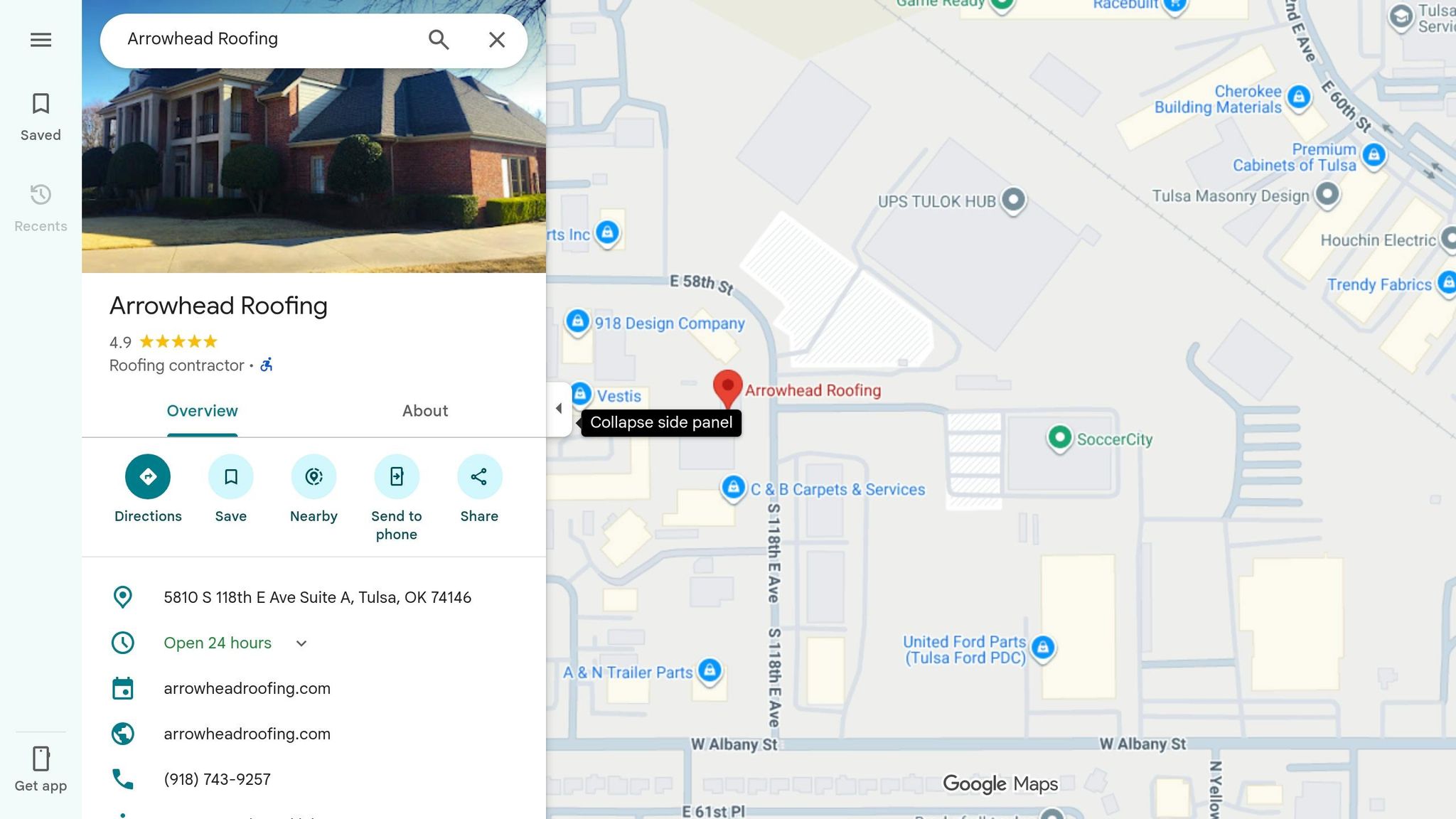
Once you’ve taken note of both indoor and outdoor issues, it’s time to decide if you need professional help. Certain signs make this decision pretty clear.
You should call a roofer if you notice granules collecting near downspouts, dents on gutters or metal vents, missing shingles, or exposed felt paper. Indoors, be on the lookout for moisture in the attic or a musty smell in upper rooms. These are strong indicators that water has already made its way inside.
“If there are dents on your vents, there is almost certainly damage to your shingles.” – Arrowhead Roofing
Water damage can escalate quickly, leading to mold growth or drywall problems in as little as 48 hours. If you spot any of these issues, it’s crucial to act fast – before another storm rolls in.

If your initial observations raise concerns, a professional inspection can provide a complete picture. These inspections cover all the areas that hail and wind might affect, with a technician walking the roof and examining every detail.
| Inspection Component | What Technicians Look For |
|---|---|
| Shingles | Bruising, dents, granule loss, or edges lifted by wind |
| Soft Metals | Dents in flashing, vent caps, and gutters |
| Accessories | Cracks in vent pipes, gaps in skylight seals, chimney flashing issues |
| Structure | Rotting decking, ventilation problems, worn underlayment |
| Interior | Bubbling paint, leaks near light fixtures |
A thorough inspection usually takes 30 to 60 minutes, depending on the roof’s size and complexity. Afterward, you’ll receive a detailed report outlining the findings and recommendations. This documentation is often required by insurance companies to approve claims for storm damage.
“Most insurance companies require a professional roof inspection to document hail or wind damage before approving claims for repairs or replacements due to storm-related roof leaks.” – Arrowhead Roofing
With this report in hand, you’ll have the information you need to move forward with repairs or replacement.
If you’ve identified potential damage, Arrowhead Roofing is ready to step in and assess your roof’s condition. Serving the Tulsa metro since 1987, they’ve installed over 31,000 roofs in the area. As Oklahoma’s oldest GAF Master Elite® contractor, they bring extensive expertise to the table – a critical factor when dealing with insurance claims.
Their inspections are free of charge, and they use Xactimate pricing – the same software relied on by insurance adjusters – to ensure their estimates align with industry standards. They’ll even meet with your insurance adjuster on-site to address technical questions and ensure all damage is accounted for. If your roof needs immediate protection while your claim is being processed, they also offer emergency tarping services.
For homeowners in Owasso, Skiatook, Collinsville, Sperry, Catoosa, or North Tulsa who are unsure whether the May 8 storm caused damage, a free inspection is a simple way to find out. You can contact Arrowhead Roofing at (918) 743-9257 or schedule an appointment online at arrowheadroofing.com.

The impact of the May 8 hailstorm might not surface immediately – sometimes it takes weeks or even months for the damage to become noticeable. If you’re in the Tulsa metro area, including Owasso, Skiatook, or North Tulsa, it’s important to act now, before another storm hits.
Start with a basic inspection from the ground. Check for granules collecting in gutters, dents on vents, or missing shingles. Inside, use a flashlight to examine your attic for any signs of damage. Make sure to take timestamped photos of anything you find – these will be crucial for your insurance claim. Take a moment to review your insurance policy, too, so you’re clear on how your coverage applies. If you’re unsure about what you’re seeing, it’s time to bring in a professional.
Once you’ve done your initial assessment, don’t delay in filing your hail damage claim – most policies give you up to a year to do so. Keep in mind, though, that water intrusion can lead to mold or structural issues long before that deadline.
“Even if your roof appears intact at first glance, the damage can manifest as leaks and structural issues months later.” – Messick Roofing
If you’re still uncertain after your inspection, reach out to Arrowhead Roofing for a free, detailed evaluation. Serving the Tulsa metro since 1987, they can thoroughly inspect your roof, document any issues, and explain your options – all before you file an insurance claim. Call them at (918) 743-9257 or schedule an appointment online at arrowheadroofing.com.

Hail damage can reduce your roof’s lifespan, even if it doesn’t cause immediate leaks. When hail hits, it often creates hidden fractures in the asphalt layer of shingles and knocks off protective granules. These granules shield shingles from UV rays, so losing them leaves the shingles exposed to sunlight, speeding up aging and making them brittle. Over time, these weakened spots can worsen, potentially leading to leaks or structural problems weeks or even months after the storm.
If your roof is leaking, your safety should come first. Avoid climbing onto the roof and steer clear of any wet electrical equipment. Place buckets or containers to catch dripping water and, if you notice bulging areas in the ceiling, carefully drain them to prevent additional damage. For exterior issues, use tarps to cover larger openings or seal minor cracks as a temporary fix. Since leaks can lead to mold growth and damage to drywall in no time, it’s crucial to call a professional roofer right away. Arrowhead Roofing provides 24/7 emergency services to safeguard your home when you need it most.
Functional damage compromises your roof’s performance. This includes issues like cracked shingles, granule loss that exposes the asphalt layer, or punctures. On the other hand, cosmetic damage is more superficial – think minor dents on gutters or flashing – that doesn’t interfere with water protection. Since not all damage is visible from the ground, a professional inspection by Arrowhead Roofing can help identify problems and assess whether they impact your roof’s functionality.
