Schedule Inspection
Use the calendar below to select a date & time convenient for you.
APPOINTMENT WINDOW: tech arrival time may vary by +/- 15 minutes (if your appointment is 9:00am, arrival window would be 8:45-9:15am)
We plan office roof replacements in Tulsa around your tenants – not just the roof. Before work starts, we match roof sections to occupied suites, flag noisy work, and set 1 property-management contact for tenant updates.
Our plan covers:

The goal: a written plan before work begins, with confirmed contacts and schedules so you know what happens next.
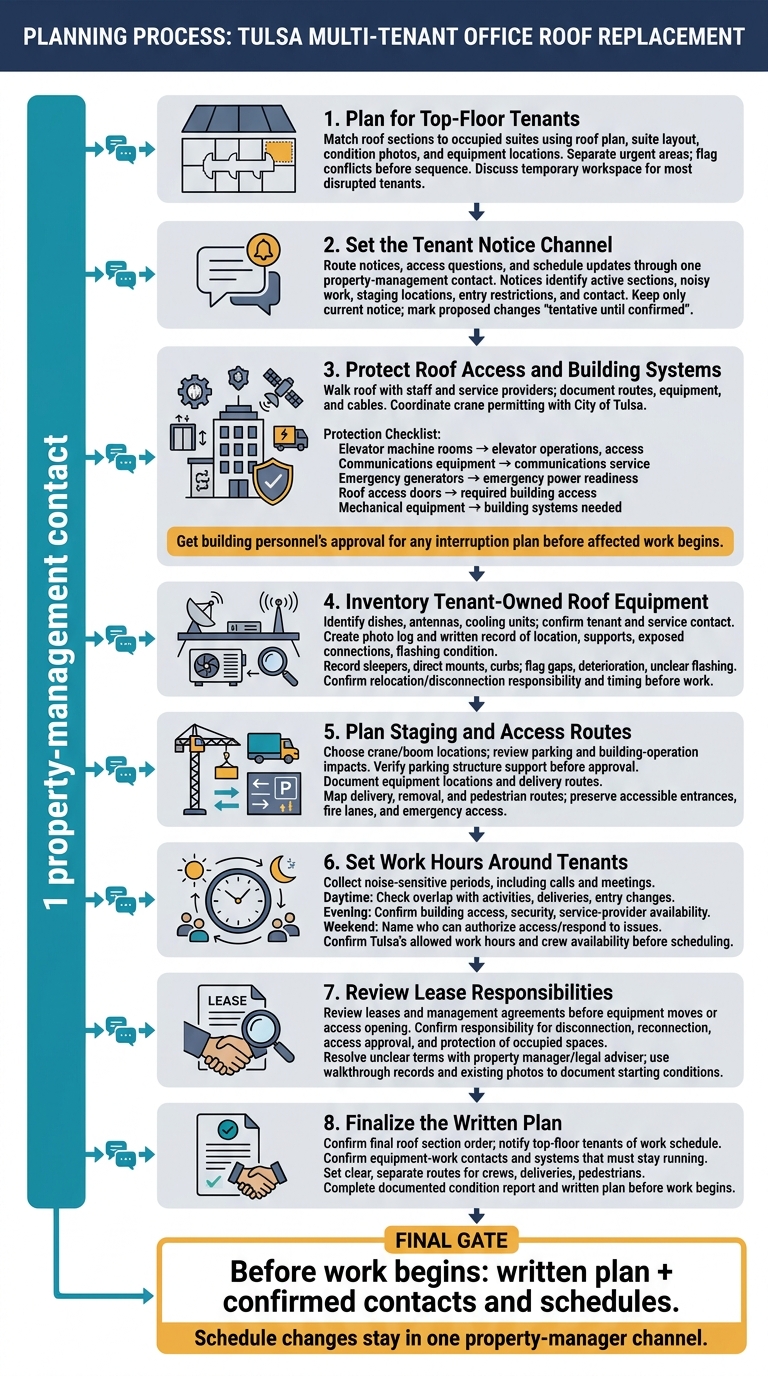
Tulsa Office Roof Replacement: Tenant Coordination Plan
Top-floor tenants feel roof work first, so we need to plan those sections with extra care and spread disruption across tenants.
Before discussing the work sequence, review our commercial roof replacement services.
Once the sequence is set, match each roof section to the suites below it.
Pair the roof plan with the top-floor suite layout, roof-condition photos, and equipment locations.
Label each work section with the occupied spaces beneath it so your property manager has one clear reference.
Separate urgent areas from those with flexible timing, and ask the property manager to flag tenant conflicts before finalizing the sequence.
For tenants facing the most disruption, discuss temporary workspace arrangements with the property manager and agree on how to provide advance updates.
Keep the property manager informed if the sequence changes.

Once the roof sections are set, route all tenant updates through one property-management contact.
Use a single channel for notices, access questions, and schedule updates so every tenant gets the same schedule.
Keep only the current notice in that channel, replacing it when plans change.
Explain what changed and which earlier instructions no longer apply.
Each notice should name the active roof sections, describe expected noisy work, and identify staging locations and entry restrictions.
Include the property-management contact for access questions and tenant concerns.
Set the update schedule before work starts, and label proposed changes as tentative until confirmed.

Before work starts, meet with building staff and service providers to plan for clear access, uninterrupted service, and protection of roof systems serving occupied spaces.
Coordinate crane permitting with the City of Tulsa.
Walk the roof with building staff and document access routes, equipment, and cables before materials arrive.
| Roof feature | Coordination needed | Do not interrupt without an approved plan |
|---|---|---|
| Elevator machine rooms | Protect access routes and keep service personnel informed | Elevator operations and required access |
| Communications equipment | Map equipment, cables, and service needs before staging | Communications service |
| Emergency generators | Keep access and service areas clear | Emergency power readiness |
| Roof access doors | Control entry and keep routes clear | Required building access |
| Mechanical equipment | Coordinate protection, shutdowns, and service access | Building systems needed for occupied spaces |
Get building personnel’s approval for any interruption plan before affected work begins.
Then inventory tenant-owned roof equipment before staging starts.

During the roof walk, identify every satellite dish, antenna, and tenant-installed cooling unit, and ask your property manager to confirm the tenant and service contact for each.
Create a photo log and written record for every unit, noting its location, supports, exposed connections, and flashing condition.
Don’t assume every unit has a proper curb detail. Record whether each unit uses sleepers, direct mounts, or curbs, and flag gaps, deterioration, or unclear flashing details for review.
For commercial TPO roofing, account for supports and penetrations rather than assuming existing details can stay unchanged.
Before work starts on a unit, have your property manager coordinate any relocation or disconnection with the tenant and service provider, then document who will move it and when.
Confirm those arrangements before scheduling work around that unit.

After you map roof systems and tenant equipment, choose crane or boom locations before deliveries begin.
Have your property manager review each location and how it will affect tenant parking and building operations.
Before approving staging on a parking structure, verify that the structure can support the planned use.
Document approved equipment locations and delivery routes in a written plan.
With staging locations set, map how materials will move through the site.
Review parking, loading areas, accessible entrances, fire lanes, and emergency access together.
Map delivery, removal, and pedestrian routes so staging keeps access clear.
Schedule deliveries around tenant schedules to limit access disruptions, and send route changes through the property-management channel.

With staging routes set, we can plan when noisy work will happen.
Ask tenants for their noise-sensitive periods, including calls and meetings, then schedule work phases around those times.
Before scheduling evening or weekend work, confirm the City of Tulsa’s allowed work hours and check crew and service-provider availability.
| Proposed work period | Questions to resolve |
|---|---|
| Daytime | Which tenant activities overlap with overhead work, deliveries, and entry changes? |
| Evening | Who will coordinate building access, security, and service-provider availability? |
| Weekend | Who can authorize access or respond to issues? |
Work outside office hours changes who needs to be available.
Before you notify tenants, name who can approve access and respond to issues during each proposed phase.
If you find membrane damage, flashing issues, or weather-related wear, we can address it with commercial roof repair while keeping the replacement plan on track.
Once you’ve set the hours, check them against the lease before notifying tenants.

Once work hours are set, review your leases and management agreements before anyone moves equipment or opens access points.
Before assigning responsibility for roof access, tenant-owned equipment, and interior protection, check the terms for equipment disconnection and reconnection, access approval, and protection of occupied spaces.
If a lease term is unclear, document the gap and resolve it with your property manager or legal adviser before work begins.
Use the documented walkthrough of the roof and roof-mounted equipment, along with existing photos, to clarify who is responsible for what and record the roof’s starting condition.
For background on the project process, see our commercial roof replacement guide.

With the work sequence, notices, access, and equipment mapped out, finalize the tenant plan.
Confirm the final roof section order, and let top-floor tenants know when work will reach their spaces.
Keep all schedule changes in one property-manager channel so tenants know where to find updates.
Confirm contacts for equipment work, identify systems that must stay running, and set clear, separate routes for crews, deliveries, and pedestrians.
Before work begins, complete the documented condition report and written plan.
For care after replacement, see our commercial roof maintenance plans.
To get started, request a free inspection.

We plan roof replacement around your Tulsa building’s schedule to help tenants stay open with as little disruption as possible.
We begin with a documented roof walk and condition record, then plan the work around occupied areas, access points, and rooftop equipment timing.
Before recommending a full replacement, we focus on fixing what’s failing.
Request a free inspection.
If weather changes the schedule, we work with you to adjust installation phases and coordinate tenant schedules, access, and protection for rooftop equipment.
Our focus stays on limiting disruption and keeping roof sections weathertight throughout the work.
We plan roof work around tenant schedules, access needs, and rooftop equipment to keep disruptions to your business to a minimum.
For your multi-tenant office building in Tulsa, we coordinate tenant notifications through you as the property manager, so communication stays in one channel.
Request a free inspection to get started.
