Schedule Inspection
Use the calendar below to select a date & time convenient for you.
APPOINTMENT WINDOW: tech arrival time may vary by +/- 15 minutes (if your appointment is 9:00am, arrival window would be 8:45-9:15am)
A roof maintenance program should help you decide what to repair now and what to budget for later. We recommend checking 3 things before you sign: inspection timing, included work, and how roof records are kept.
For your Tulsa building, that means tracking leaks, drainage problems, past repairs, and suspected wet insulation – not just scheduling visits.
We use those findings to help you:

The limit? Maintenance cannot prevent storm damage or save a roof beyond repair.
Start with a written scope that explains what’s included, what costs extra, and who approves repairs.
The risk isn’t just the leak you see – it’s the opening that keeps letting water into the roof assembly.
A lifted seam opening lets water enter beneath the membrane. A failed pitch pocket, a sealed penetration pocket around a pipe or curb, can let water in when its seal cracks or pulls away.
A blocked drain allows water to back up instead of leaving the roof. That standing water can push water into a seam, flashing, or drain connection. Clearing the blockage helps, but the roof still needs a separate repair check.
A maintenance program gives you time to catch these problems before they turn into larger repairs.
Your roof records help you track what changes between inspections.
Ask for findings that identify the exact location and condition – not just a broad label.
Dated photos and consistent location labels should help you compare the same area during later roof inspections.
Keep past repairs and deferred work in your roof history, along with photos, documented problems, and a repair plan.
That record gives you a baseline for the next inspection.

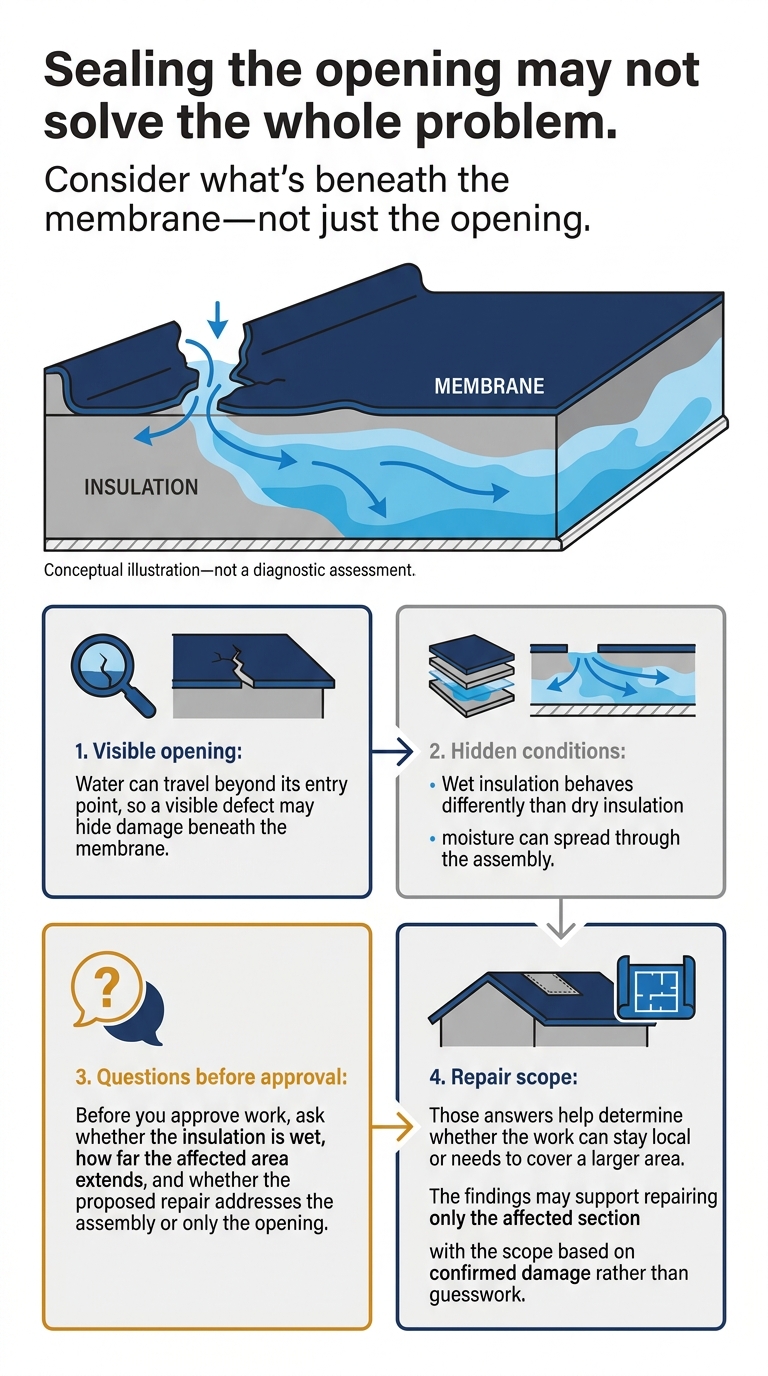
Why Wet Roof Insulation Changes Repair Decisions
Water can travel beyond its entry point, so a visible defect may hide damage beneath the membrane.
Sealing the opening may not solve the whole problem or settle whether you need a repair or replacement.
Wet insulation behaves differently than dry insulation, and moisture can spread through the assembly.
That means we need to consider what’s beneath the membrane – not just the opening – when deciding what to repair.
Before you approve work, ask whether the insulation is wet, how far the affected area extends, and whether the proposed repair addresses the assembly or only the opening.
Those answers help determine whether the work can stay local or needs to cover a larger area.
The findings may support repairing only the affected section, with the scope based on confirmed damage rather than guesswork.
Moisture can spread beyond its entry point, so your program needs a clear scope – not just regular visits.
Before you sign, use this checklist to discuss our commercial roof maintenance plans.
| Program element | What to confirm |
|---|---|
| Scheduled inspections | When inspections happen and which areas they cover. |
| Documented findings | How roof conditions and unresolved items are recorded. |
| Minor repairs in scope | Which repairs are included and which need separate approval. |
| Drain and debris clearing | Whether clearing is included and where that work stops. |
| Inspection and repair records | How the program keeps inspection and repair history available over time. |
Define minor repairs before you approve work.
For drainage, check whether clearing covers debris around the drain, the drain opening, or the drain line below the roof surface.
Agree on who receives findings and who approves work outside the scope.
Your records should show what was repaired and what remains open, with unfinished items carried forward so they don’t get lost between visits.
Use our complete guide to commercial roof maintenance and commercial flat roof annual maintenance checklist to prepare your questions, including what’s covered before a small issue becomes a larger repair.
Then confirm the inspection timing for your roof.

Maintenance records also matter when you review your warranty obligations.
Neglected maintenance can put coverage at risk, and a maintenance program doesn’t automatically meet your warranty requirements.
Before you approve a maintenance agreement, check your warranty for required inspection timing, maintenance tasks, records, and contractor qualifications.
If your roof needs repairs, confirm whether the manufacturer requires specific materials, repair methods, or approval before work begins.
Get any unclear requirements in writing before work starts.
Keep dated reports and photos in your warranty file, and make sure your maintenance records match what the warranty requires.
Our roof warranty information can help you prepare your questions.
For coverage questions, refer to your warranty and the manufacturer’s written guidance.

Your roof record tracks what changed – and helps you decide where to spend. Planned maintenance gives you documented findings to separate work that needs attention now from work you can budget for later.
Use that record to build a long-term repair plan, then update it when findings change, repairs are finished, or larger repairs need review.
Group repairs by urgency so you know what comes first.
Ask for findings grouped into urgent repairs, items to watch, and larger work to review later. Use the professional inspection record to set those priorities.
Before approving work, ask how the roof’s condition, access, drainage, and repair needs affect the scope. Keep replacement planning separate from repairs that need attention now.

Maintenance cannot prevent storm damage or restore a roof that is already beyond repair. It helps most when your roof still has usable life and you’re managing risk rather than deciding whether to replace it.
Storm damage and damage caused by other trades need separate review. Before rooftop equipment installation or tenant work starts, check the agreement’s exclusions for HVAC work, tenant work, and rooftop additions.
We provide commercial roof repair for membrane damage, flashing issues, and weather-related wear.
Treat storm damage separately from routine upkeep. Ask whether your agreement includes post-storm inspections and whether repairs are handled separately.
For more industry insights, visit our roofing news and tips blog. Next, we’ll look at scheduled maintenance versus a callout-only approach.

Choose a maintenance program for scheduled reviews and a continuing roof record, or callout service if you prefer to request visits when concerns come up and track roof changes yourself.
Let your warranty obligations and repair budget guide your choice.
Compare how each option handles reviews, records, and repair planning.
| Decision point | Maintenance program | Callout service |
|---|---|---|
| Review process | Scheduled reviews follow an agreed scope. | You arrange visits when you spot a concern. |
| Roof records | The program should define how continuing records are kept. | Confirm how records from separate visits will be retained. |
| Repair planning | Recurring findings help you plan future work. | You coordinate reviews and repair planning separately. |
Before you choose, ask when suspected moisture calls for a deeper inspection.
A clear scope connects roof findings to budget decisions.
For more detail, see our commercial roof maintenance guide, flat roof maintenance checklist, and commercial roof repair information.

Yes. A preventive roof maintenance program can help catch small problems early on your Tulsa building, before they turn into larger repairs or lead to premature roof replacement.
Your program should include inspections, drainage clearing, and checks of seams and flashing.
Written findings can help you plan your maintenance budget.
Maintenance also helps you meet manufacturer warranty requirements, but it doesn’t guarantee coverage.
Request a free inspection.
Request a free inspection if you’re concerned about wet roof insulation.
Your preventive roof maintenance program should include scheduled inspections and documented findings so you can spot roof issues early and track your roof’s condition over time.
Set your roof’s inspection schedule based on its condition and past inspection reports.
Your preventive maintenance program should include scheduled inspections and written findings to help spot small problems, keep drainage clear, and track repairs over time.
Add inspections after major hail or windstorms, and adjust the schedule as conditions change.
Request a free inspection.
