Schedule Inspection
Use the calendar below to select a date & time convenient for you.
APPOINTMENT WINDOW: tech arrival time may vary by +/- 15 minutes (if your appointment is 9:00am, arrival window would be 8:45-9:15am)
We plan your Tulsa restaurant’s roof replacement around prep and service – but staying open for dinner depends on safe kitchen conditions, not just the schedule.
Before we set work hours, we check 6 things:

The rule? <u>We don’t assume dinner service can proceed after tear-off.</u>
Share your prep hours, deliveries, and closed days so we can build the work plan – and keep roof checks tied to your kitchen maintenance schedule afterward.
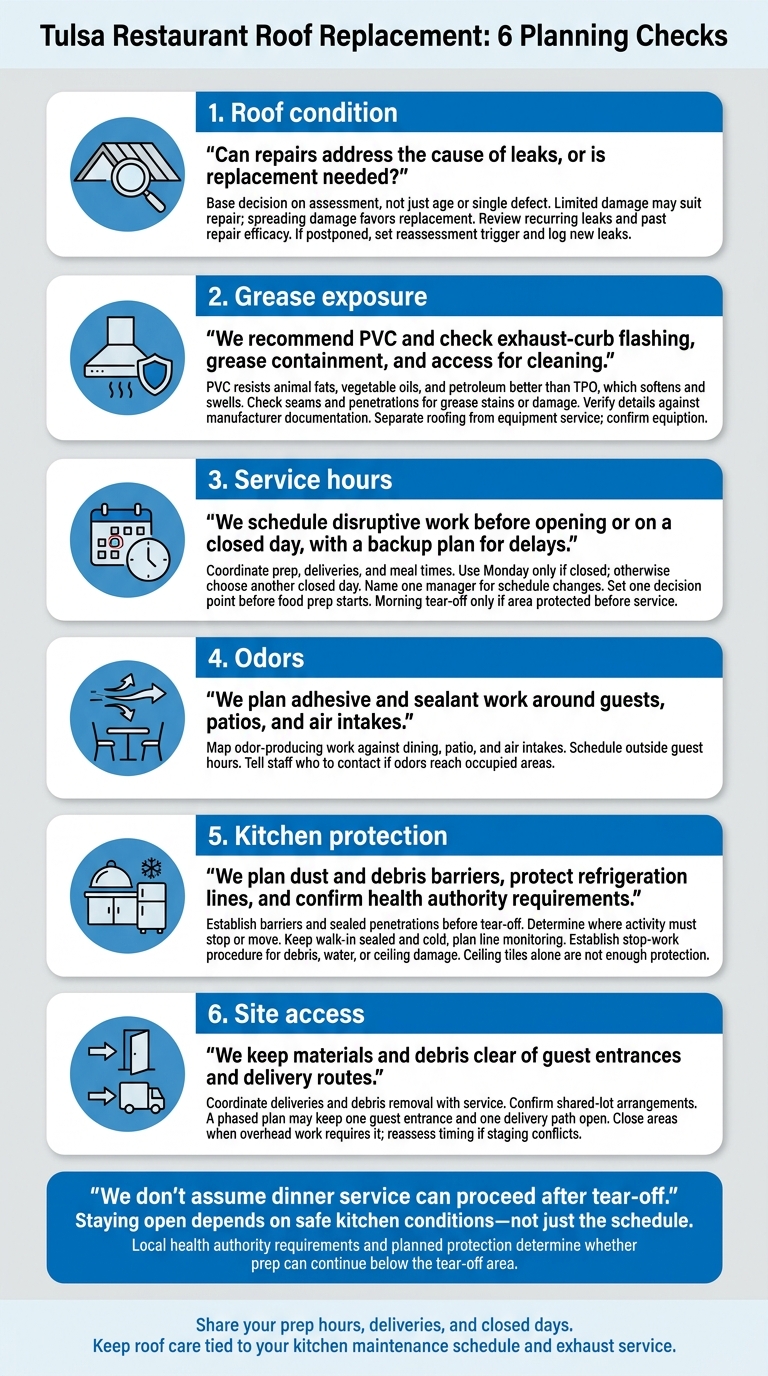
Tulsa Restaurant Roof Replacement: 6 Planning Checks
We recommend PVC for restaurant roofs because it resists animal fats, vegetable oils, and petroleum.
When those substances reach TPO, the membrane can soften, swell, and show signs your TPO roofing system needs attention.
For details, read why a restaurant roof needs PVC instead of TPO.
If you’re comparing roof systems, our commercial membrane guidance can help you weigh your options.

Start at the exhaust curb, where the hood assembly meets the roof membrane and grease, exhaust, and commercial roof replacement work come together.
Include make-up air equipment and nearby roof penetrations in your review.
The curb detail must leave room for crews to reach the fans and service the curb later.
Identify grease containment at the curb, and plan maintenance access before roof work begins so crews can still clean and service the equipment.
Once you’ve confirmed access, check the membrane and flashing around each connection.
Coordinate with us and your kitchen team to confirm who will handle equipment access, when that work will happen, and who will verify that the equipment is back in service.
Ask us to inspect the membrane around the exhaust assembly, nearby seams, and the flashing that connects the roof to the curb.
Flag grease staining, open seams, and damaged flashing.
Separate commercial roof repair from equipment service in the project plan before tear-off begins.
Check proposed flashing and sealant details against the manufacturer’s technical documentation rather than repeating an existing detail without verifying it.
Keep the inspection focused on roof damage around the curb and access for future cleaning.

Plan roof work around prep, deliveries, lunch, and dinner, letting kitchen activity set the work window.
That window sets the pace for the rest of your roof replacement.
Map the roof areas above your kitchen and dining room so we can plan material deliveries and noisy work before opening – but only when they won’t block kitchen prep or restaurant deliveries.
Schedule tear-off separately, and use a morning window only if the area will stay protected before service starts.
Agree in advance on what happens if the work doesn’t finish as planned.
If your restaurant closes on Monday, reserve that day for work that could interrupt cooking or take kitchen equipment out of service.
Choose another closed day if it gives us a better work window, and don’t assume dinner service can proceed just because the calendar is open.
Choose one manager to receive schedule changes, and agree on how we’ll contact them before each day’s work begins.
Set one decision point before food prep starts so your team can adjust deliveries and service plans if the work window changes.
Once we’ve set the schedule, keep odor-producing adhesive or sealant work outside guest hours.

Some roof work gives off odors that guests may notice when work happens too close to service hours.
Patio seating needs attention, too, since guests outside may be downwind of the work.
Fully adhered membrane work, exhaust flashing, liquid coatings, and some repairs can involve adhesives or sealants.
Before we start, we map the roof area against your dining room, patio, air intakes, and make-up air units.
If odors could reach your kitchen or dining room, your staff should know who to call.

With the work window set, map the roof work area and identify what needs protection below it – before tear-off starts above your kitchen.
Plan barriers for any openings before the roof comes off.
Agree on where kitchen activity must stop or move during overhead work.
Ask how the crew will keep dust and debris out of food, prep, and storage areas, including plans for dust barriers and sealed penetrations.
For the walk-in, keep it sealed and cold.
Identify refrigeration lines near the roof work, and make sure kitchen staff know when to monitor the unit during the job.
Set a clear stop-work procedure for any debris, water, or ceiling damage that reaches the kitchen.
Name the restaurant and roofing contacts who can pause activity and address the affected area so prep can resume safely.
Confirm local health authority requirements before work begins, and use that guidance to determine whether prep can continue below the tear-off area.
Don’t assume ceiling tiles alone provide enough protection.
With kitchen protection planned, the next step is keeping materials out of the guest path and delivery route.

With the kitchen below protected, walk the site with us before work starts to keep staging clear of your front door, patio, and delivery route.
Plan material deliveries and debris removal around your service schedule. Check food and supply deliveries each morning so trucks and containers don’t block kitchen access.
If you share a lot, confirm staging and commercial roofing rooftop access with your landlord and neighboring tenants so guest entry and deliveries stay clear.
Keep equipment and materials away from refrigeration lines.
Set up a clean staging area to keep debris out of guest areas and delivery paths.
A phased roof replacement plan can help keep one guest entrance and one delivery path open as work moves across the building.
Close patios or entrances only when overhead work requires it, and schedule those closures around daily production.
If staging still conflicts with service, decide whether the project can wait.

If the roof can still be serviced, check whether replacement can wait before you commit to the full job.
Base your decision on a roof assessment, not its age or a single visible defect – the roof’s condition should guide you, not the calendar.
If damage is limited to one penetration, repair may fit. If damage is spreading, replacement may make more sense.
Review your repair history to see where leaks return, when they happen, and whether past repairs held, especially over food or prep areas.
The key question: Would the work fix the cause or only the symptom?
If you postpone replacement, set a trigger for the next assessment, log new leaks or stains, and put the roof on a maintenance plan.

Make roof care part of your kitchen maintenance plan and schedule roof work alongside exhaust service.
Keep PVC in the plan for kitchen-exhaust roofs, and add exhaust-curb details to your maintenance calendar.
Before work starts, agree on service hours, odor work, kitchen protection, walk-in operation, and routes for guests and deliveries.
Our commercial roof maintenance plans can help you keep service on track by planning roof work around your kitchen needs.
Share your kitchen schedule and exhaust-service access needs with us.
For your Tulsa restaurant, request a free inspection.
The information provided doesn’t identify who decides whether your Tulsa restaurant’s kitchen can stay open.
We focus on proper detailing around exhaust penetrations and grease-resistant roof assemblies to limit disruption while you serve guests, but that doesn’t confirm your kitchen can remain open.
Request a free inspection with Arrowhead Roofing.
We work with you to schedule roof work around dinner service and limit disruption to your restaurant.
That doesn’t guarantee you can stay open for dinner.
Request a free inspection.
The information provided doesn’t say whether you should schedule exhaust cleaning before or after roof replacement.
For your Tulsa restaurant roof, grease-resistant materials and careful exhaust detailing matter because of grease and exhaust exposure.
Request a free inspection.
